A Short Guide to In vitro Immunogenicity Assays
Protein therapeutic design is pretty cool (if we do say so ourselves!). There's so much possibility for design and so much we’re hoping these therapies can achieve for patients. But there's very real consequences of getting it wrong!
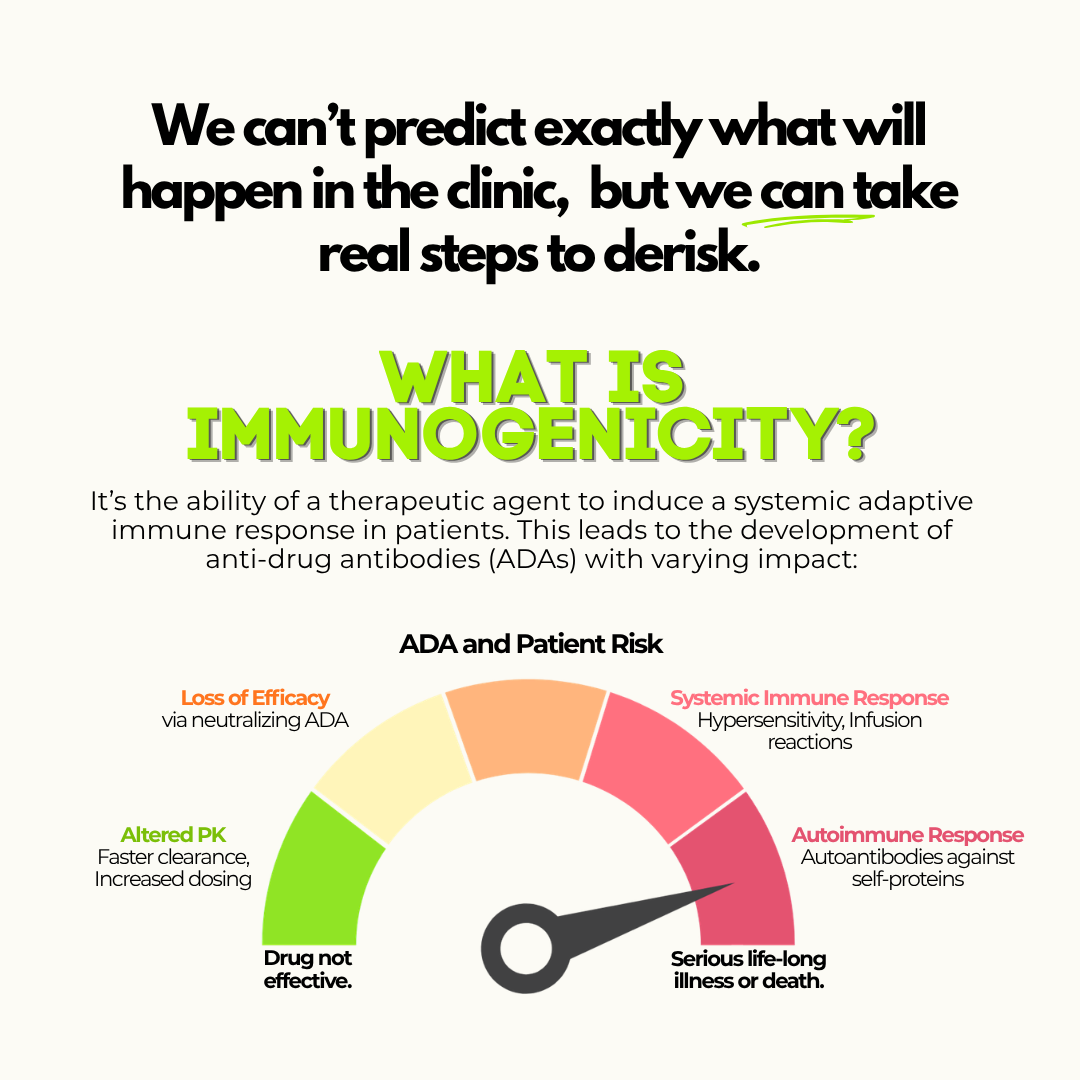
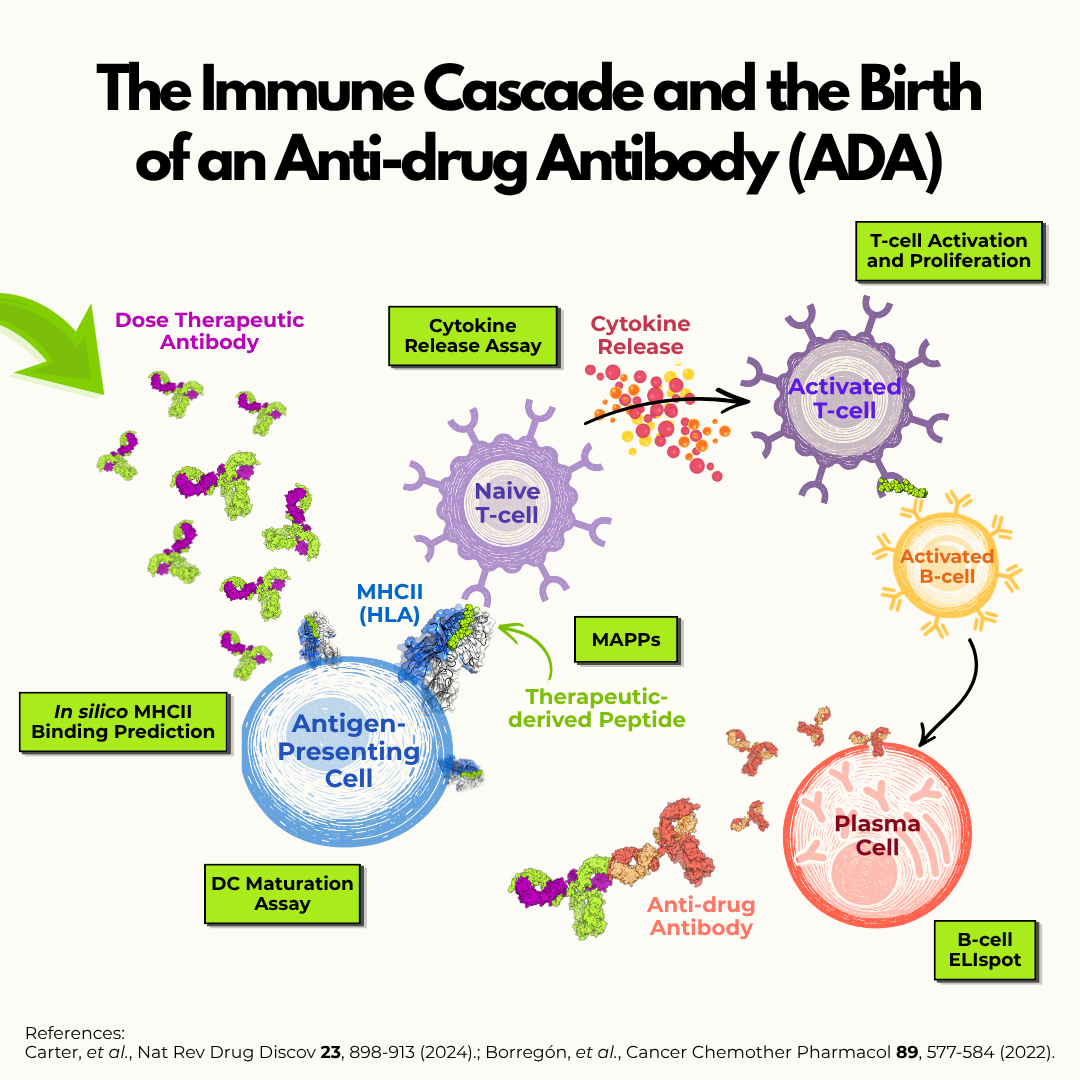
We're building a therapeutic that often needs to travel the body to reach its target, which means it also needs to make it past the patient's immune system. Get flagged as a threat, and a variety of different outcomes can lay ahead: from serious immune reactions to an anti-drug antibody response that neutralizes your drug before it can do its job.
This is where immunogenicity risk assessment comes into play. And it shouldn’t be an afterthought! We shouldn't be crossing our fingers and hoping for the best when we design therapeutics, waiting until we dose patients to understand potential immunogenic effects.
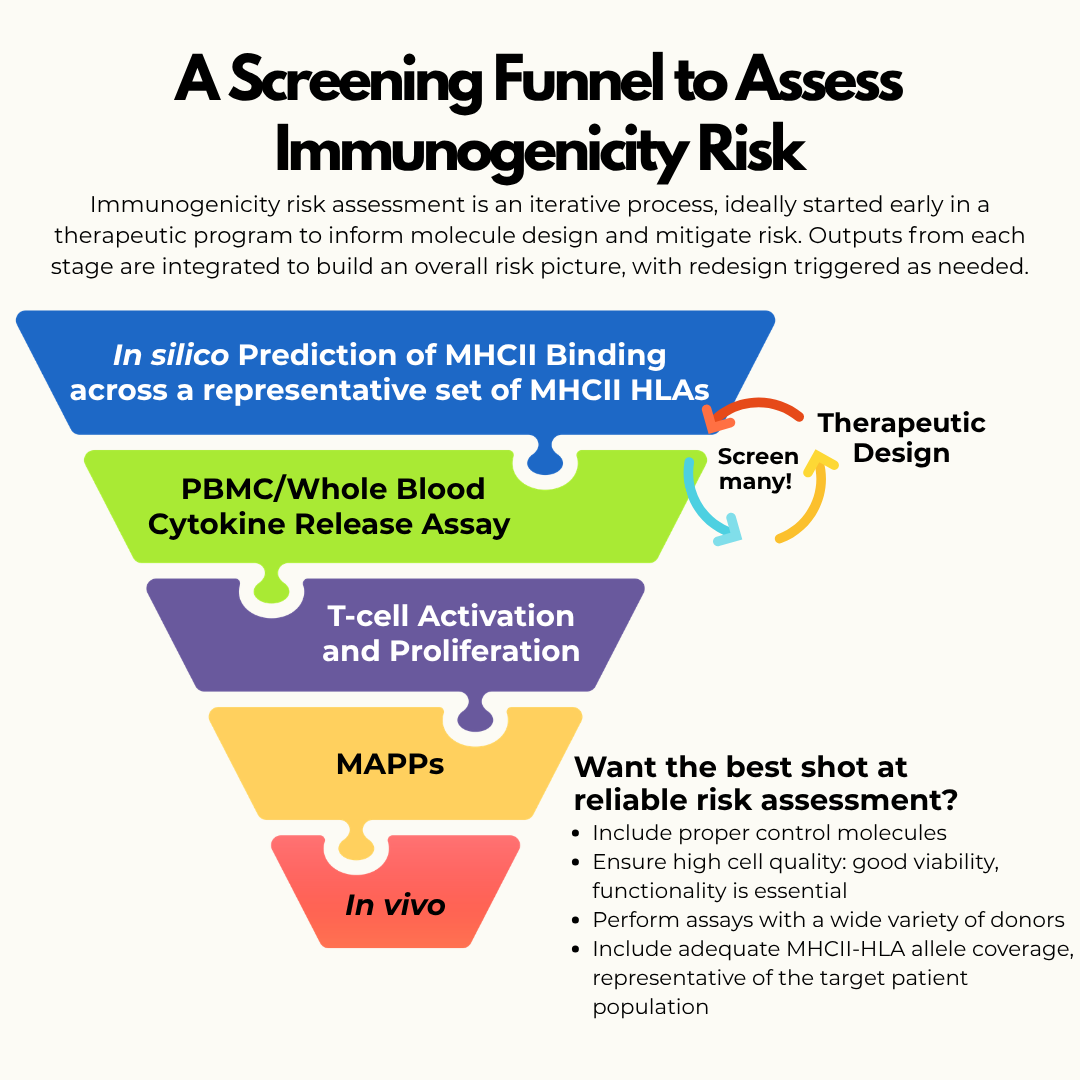
Immunogenicity risk assessment works best as an iterative process, ideally starting early in a therapeutic program to inform design and mitigate risk. Assays are one part of that assessment and have a role during each stage of development:
𝗘𝗮𝗿𝗹𝘆-𝗦𝘁𝗮𝗴𝗲 𝗗𝗲𝘃𝗲𝗹𝗼𝗽𝗺𝗲𝗻𝘁: Screen many candidates quickly with in silico MHCII binding prediction and cytokine release assays to flag high-risk designs before they go further
𝗠𝗶𝗱-𝗦𝘁𝗮𝗴𝗲 𝗗𝗲𝘃𝗲𝗹𝗼𝗽𝗺𝗲𝗻𝘁: As leads emerge, layer in more intensive in vitro assays (T-cell activation, MAPPs) for a deeper, more mechanistic read on risk
𝗧𝗵𝗿𝗼𝘂𝗴𝗵𝗼𝘂𝘁 𝗗𝗲𝘃𝗲𝗹𝗼𝗽𝗺𝗲𝗻𝘁: Integrate outputs across assays to build a cumulative risk picture and redesign as needed.
Since no single assay tells the whole story, the power is in stacking complementary methods across the discovery-to-lead pipeline.
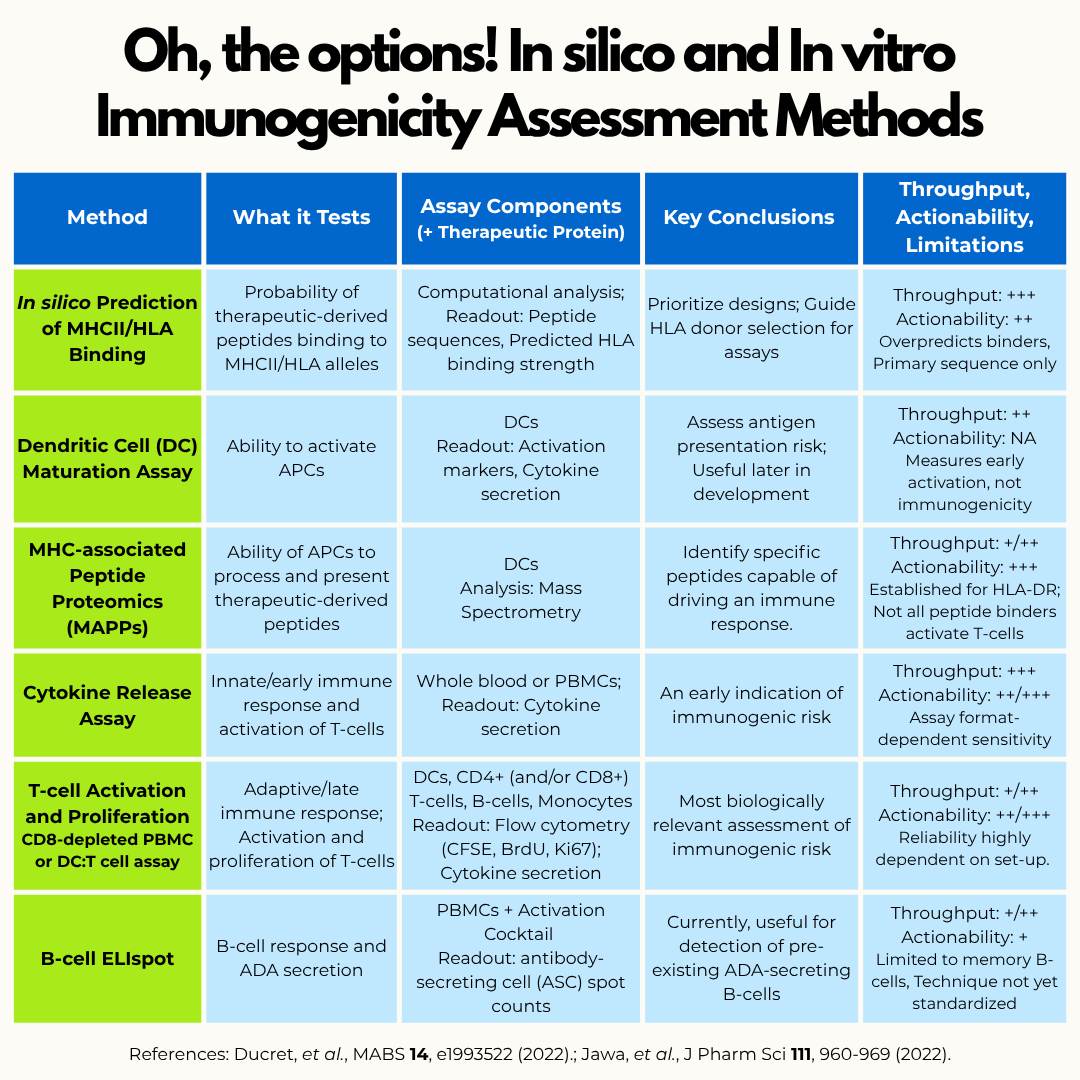
What does the in vitro immunogenicity assessment toolkit look like? We're breaking down the key in silico and in vitro assays below!